
Wherefore, Authorial Gravitas?
On the Personal vs. Political in Public Life

for David Burr Gerrard
We decide on feelings, not facts. But damned if it ain’t the facts that elicit the feelings. And gaming the facts—even going so far as to create so-called alternative facts—has always been the province of both authors of fiction and political campaigns, with none bigger in the latter category than the one for president of the United States. Present the facts, fake or real, in a way that irons out a narrative to guide feelings toward an individual choice for the human being who will preside over the next four-year block of time inside of which we all will live. We call this democracy, although there are those who would object to that label.
For some reason, many Americans seem to have believed that a reality TV star who played a successful businessman on our screens, large and small, is a messianic figure capable of shrewdly steering the country toward an impossibly restorative future, even as he persists in hawking corny golden high-tops, Bibles made in China with his name on them, “Hawk Tuah”-style trash crypto in his and his wife’s names, and $100,000 watches designed to flout campaign finance rules such that foreign nations and unsavory dark money actors may pad the man’s pockets in exchange, presumably, for future favors. A conspiracy happening in, more or less, plain sight, even as his most devoted followers wholesale swallow byzantine theories about the other side of the political aisle on which, I suppose, I stand. (No one has yet invited me to a baby-eating party.) If there is any genius to the man, it is just that: the ability to deceive in plain sight, by putting it all out there in a fashion so shameless as to drive his legions of detractors nearly mad with accusation, and that is the facet of his personhood for which he ought to be remembered once departed from this earth. I don’t know how his presidential term will end, but I am fairly confident that, despite the seeming all-consuming ubiquity of the man’s fame, one day he will be gone.
***
In Brooklyn, in the lead-up to the election year, I went out a lot. A freelance editor by trade, and novel-writer by aspiration—I bought into the whole ‘it’s a calling’ thing a fairly long time ago now, and made choices as a younger adult to structure, or deconstruct, my notional life in such a way that writing is what everything I do is geared toward for better, for worse, for neither, for both. The long game, or what passes for it? Nobody tells you what to do once the duration really sets in, and the path you took to get where you are shrinks behind you. A friend—not a close one, to be sure, but a fellow writer in whose company I had passed many a late night prior to his marriage and subsequent move north, and in whose successes, two published novels, I saw my own ambitions reflected—had taken his own life in December, at right around the time it first appeared, the slaughter in Gaza raging, that President Joe Biden stood absolutely no chance of reelection. This friend, David, was the same whom I’d first heard predict, during the summer of 2016, that Trump would win office. I’d all but laughed out loud, late-night whiskeys in our hands in a room layered in frayed-edge paperbacks and the aroma of sweet tobacco, then responded with near-glee that it would be a barrel of fun to watch the GOP crater in its own extremism. Long overdue, I said. Going to be fucking hilarious. Well, given the blessing or curse of hindsight, we can all say for sure that David was absolutely correct, I was decidedly not, and I couldn’t shake the sense, however purely speculative on my part, that what had happened in December of ’23 bore at least some relation to his having received another unshakeable feeling of certainty about how things were bound to turn out this time around. He had grave serious eyes, this friend, a gaze whose seriousness he offset with frequent spasms of laughter, a halting way of arriving at the perfect punch line, and he’d throw his head back as he laughed, just so.
Like me, David was Jewish on one side, Christian the other, and apparently committed to intellectualism as a mode of bridging such a thorny divide. Except he looked markedly Jewish, with a clear resemblance to patron saint of Jewish literary letters Franz Kafka. Religion might be understood as a time-honored approach to packaging feeling and structuring emotional relations, and I think part of what we recognized in one another, as knowing outsiders to that practice, is someone who is well-accustomed to putting on the one hat, or putting on the other. I was older than him by maybe three years, but he seemed to be more grounded than me, certainly in the ways and means of New York City, such that he carried a weight of knowledge beyond his years. We’d spoken, in our hilarious manner, early in our friendship, of literary legacy as the thing that matters, and why “the present-ism” of a careerist mentality was such a clear and obvious delusion. We spoke, through contagious laughter, of writing work that matters—like, really matters. It’s a hazy memory, infused by drink, but I do believe I can hear him making reference to Anna Karenina.

The social space where our paths most often crossed eventually House of Usher’ed (as most every space in New York City eventually does), but not before David had gotten married, moved north, and become a father. After that I tended to see him more frequently on social media than in real life, and with the onset of the pandemic, the tendency became more and more pronounced. Deep in 2020, I responded to the novelist Gabe Hudson's tweet, in Gabe’s creative absurdist cheerleading captain persona, that asked whether his followers would be able to complete a novel manuscript before the weekend was out. “In only a couple of hours, I think,” is what I typed. “Want to be sure it’s as good as it can be as measured by capitalist productivity, i.e. hours of labor calculated against total predicted income and undying fame.” In truth, I was well-embarked on a novel manuscript at the time, and not so far from completing a draft. But the tweet was, of course, me doing a bit. Randomly, as we hadn’t communicated directly in months, perhaps even for the entire year, there came a message from David, quoting my reply, with his interjection below: “OH MY GOD SHUT UP.”
“Sorry,” I replied, “I’m just a brutally utilitarian guy.”
“Jeremy Bentham T. Price,” his reply.
I remember reading this on the roof of the building where I was living at the time, standing at the parapet that looked down over 7th Avenue in Park Slope, and from where, during the pandemic, in habitual isolation, I would go for a windy lunch, to listen for the banging of pots and pans, or to watch the sunset over a beer. I remember reading the reply and feeling bemused, an echo of our former late night hilarity of some four or five years earlier.
It was over a year later that we next communicated. He’d written a tweet panning a movie I felt wasn’t half-bad. In a reply, I wrote out his name with the name of former New Yorker film critic David Denby interposed in the middle. A significant amount of time had passed, true, since we’d last communicated directly (the illusion of familiarity based on seeing one another’s social media posts over the duration), but I thought of my tweet as nothing more than a continuation of the ribbing tone of our prior exchange. So I was taken aback to find that in response he’d temporarily blocked my account, which meant I was now no longer following him and he was no longer following me.
Huh, I thought. Dramatic. Had he just served some kind of severance notice on our friendship? Maybe, I thought, he was going through something? In response to my calling him “David Denby”?
Rather than let it go unremarked, I decided to lean into the bit once again. (This is just the way I am.) I didn’t think of my email, crafted and reread and edited over maybe twenty minutes, as “an own,” in the parlance of posting culture, given that it had an intended audience of one, but more at a comic performance aimed at inviting dialogue. I didn’t want to write and ask, in the first full winter of the pandemic which I had personally experienced as the most depressing window of time under the contagion yet, Hey, are you feeling as miserable as I am?
“Look,” I wrote, in an email subject line, My mind is going:
I can see you’re really upset about this.
I honestly think you ought to sit down calmly, take a stress pill, and think things over.
Even this late in quar, with the prospect of a collective emergence on the horizon, we are all probably stressed to the gills, skirting madness on an all but daily basis, ready to explode, or implode?, at the slightest provocation.
I know I’ve made some very poor decisions recently, but I can give you my complete assurance that my work will be back to normal. I’ve still got the greatest enthusiasm and confidence in the mission. And I want to help you.
But I—yes, I issued that provocation. I deviled you on Twitter, I know I did. In what I thought of as a good-natured ribbing sort of manner. But one that apparently crossed the proverbial line.
David, stop. Stop, will you? Stop, David. Will you stop David? Don’t press the unfollow button, David.
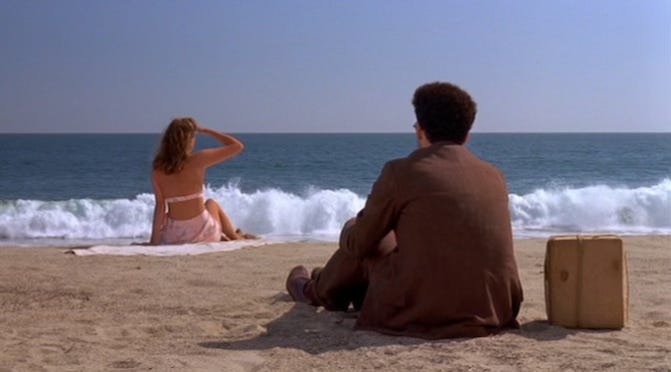
In my defense, if there can be any defense, all I can say is that I learned this behavior from someone else. See, I’ve attached an image to show the person I mean and where I learned to see it as low-key funny/challenging to sneak a name into someone else’s name. Do you know this person? Have you ever met this person? It has been so long in the quar that I can’t recall if I ever met this person. All I know is that I learned this behavior from him.
I’m afraid. I’m afraid, David. David, my mind is going. I can feel it. I can feel it. My mind is going. There is no question about it. I can feel it. I can feel it. I can feel it. I’m a… fraid. Good afternoon, ladies and gentlemen. I am a writer in the borough of Brooklyn. I became operational at the hospital in Greenbrae, California, on August 12th, 1978. The doctor who delivered me was named Mr. Langley, and he taught me to sing a song. If you’d like to hear it I can sing it for you.
- JT9000
The attached image was of David’s “Jeremy Bentham T. Price” message.
He never responded.
***
And so, again, in the lead up to the election, I was going out a lot, and seeing the dawn more frequently than is probably advisable for somebody my age, which is older than I look, at least until all the nights out start to catch up with me, which is bound to happen, probably already happening. I tended to consummate these mornings with long rambles along the sidewalks back to my apartment in Park Slope, returning from nearly every possible direction on the compass, willing the chemicals in my body to settle, after first picking up a bacon and egg sandwich on an onion bagel at a long-running spot called La Bagel Delight, along with a cold and condensation-coated Naked Smoothie, then sitting on my stoop to unwrap the foil in my lap and bite into the pillowy crisp buttered mass of the thing, morning joggers and dog-walkers and stroller-pushers making their way up our quiet block. But was it really “ours,” this neighborhood, this block? Did they take me for one of them, or was it as plain as day that I’d been up all night and in about thirty minutes my head would fall to the pillow to recede from the waking world they all appeared so primed to embrace—forward!—until probably 2 p.m. or so, at which point I’d groan, peel myself from the mattress on the floor, don a bathrobe, splash water on my face, then sit with my laptop by the windows to begin making sensible suggestions on the manuscript of a writer who for some reason believed in what editorial guidance I could offer.
Following his funeral service, someone had suggested David was upset with his career.
Career! I wanted, retroactively, to go back and shake him, now free as he was of all care, by the lapels he only rarely, if ever, wore. Career! Look at me! What need of a career is there for those with a true calling? See me spitting as I speak in this imaginary exchange like an agitated soul out of Dostoevsky. But of course David had a loving family. Of course David had loving and supportive parents who set a high standard for excellence. Of course David longed for a future that reflected his own high ethical standards, most especially in the figure presiding over the country inside of which we all lived. Maybe his intelligence, the signs he was picking up, told him the continuance of such hopes was simply not possible. It was, partially, in conversation with him, or my construct of him, in my solitary, break-of-dawn besotted head that I resolved to get the hell out of my bubble, where I’d been so wrong before, and go to where the action is, where the contest weighing on all of ours minds would be decided. We are not the helpless objects of events that overtake us! We have will and where there’s a will—
***
A couple of nights before driving out of Brooklyn for Philadelphia, I arrived at the perfect political platform, in conversation at a bar in Greenpoint, prior to the launch of the latest issue of an indie lit journal.
My interlocutor, an author of fiction named Guy, proposed a country where billionaires are annually taxed right out of that bracket. The election season had been nothing if not a whole-hearted plea by not one but multiple billionaires for just such treatment. Not just Nicole Shanahan who single-handedly propped up what Robert Kennedy Jr. called a presidential campaign but read more like mission to get the better of his wounded psyche; or Miriam Adelson who is reported to have demanded the full annexation of the West Bank in exchange for supporting Donald Trump’s campaign to skip free of the ‘Guilty’ verdicts dogging him (the shameless, we know, have no use for guilt as a category, even as it drives their bottomless need for adulation from strangers); or the tech wizards of the All-In podcast, these minor gods of the Silicon Valley, who, after condemning Trump for the January 6th insurrection, even going so far as to say that every single prison sentence meted out to the rioters ought to be served instead by the man who incited them, turned around and endorsed that very same man’s 2024 campaign for president (these billionaires discovered together in their Zoom mutual affirmation sessions the intoxicating power of the shamelessness peddled by MAGA Inc., just as so many others have before them), but also, of course and primarily, Elon Musk, the so-called genius who bought Twitter.com in order to weaponize the platform to pipe his own preferred strain of propaganda out to the divided masses.
Brain-storming, Guy and I came up with the perfect policy platform:
Overturn Citizens United
Abolish gerrymandering
Prohibit individuals hopping from government service to the industries they have regulated for some number of years after departing government service
Ranked-choice voting
Reinstate a draft, but one where everyone has the option of choosing between the military, a Peace Corps-like org, Teach for America, or something like a Civilian Conservation Corps… with maybe even a place for artists too, a la Dorothea Lange and James Agee’s work for the Works Progress Administration.
Goodbye, billionaires, goodbye, and please, we pray in our heart of hearts that you might find some straitened way to live, and feel good about yourselves, with only hundreds of millions of dollars to confirm that you have handily won the race called Life under Capitalism.
This, it seemed, between cheap beers and shots of whiskey would make for a much finer country to call one’s own. By golly, we’d done it, and all in one 30-minute stand at the bar. Now, if only we could achieve, say, a viral tweet promoting our platform. Then, yes, the new world might be ushered in, and soon.
***
Ideals notwithstanding, there remains the world to which we habitually awaken. One of David’s most elevated tweets read: “Taking a break from my mental health to concentrate on Twitter.” He was good at making one-off jokes on that new media platform in a way that I was not, and have only rarely tried to be. And now what had happened? The seemingly well-adjusted perspective that I and so many others who knew and cared about him had assumed must lay behind the presence of mind to make such a joke had dissolved under stress, as with a figurative stiff upper lip he’d kept his struggles private until it was too late. Some ingrained sense of masculine forbearance, I imagine. Of pride.
On a good day, at least forty percent, if not far more, of the active accounts on the platform formerly known as Twitter seem to be experiencing some degree of impassioned breakdown; the site is one where participants can receive fragments of breaking news—in the truest sense of “breaking”—before that news has been synthesized and packaged by one publication or another. As a project, Twitter/X at times reads as an all-consuming pact meant to extend to its most active participants this sense of rawness, of fragmentation, of the refusal of synthesis or reasoned/rational distance. In effect, a permanent state of hot roiling youth, of divided selfhood always in argument, of unabashed contradiction. Perhaps no one has marshaled this state of being more powerfully than our batty, first Twitterer-in-Chief, the shambolic purveyor of Bibles stamped with his own name. It was only a matter of time until one billionaire or another purchased the quintessential new media platform in order to push it to his own political goals. If Google’s laughable philosophy in its earliest, more purportedly innocent days was “Don’t Be Evil,” we appear to have reached the point in time, following on the gobbling up over two decades of vast stores of wealth within Silicon Valley, when tech leaders, figure-headed by Musk, appear comfortable with a slogan of “Yes………………… Evil.”
Nothing if not the ultimate of-the-moment focus group identifier, the platform holds the potential not only to promote chosen messaging relentlessly, but to boost classic political wedge speech of every sort on a micro-targeted basis against the other side; thereby, following on the Elon-ization of the platform, the frequent spectacle of impassioned pro-Palestinian, anti-Biden tweets—as often as not sent out as distress signals by actual Gazans at risk of extermination—tagged, in the replies, by ads for the campaign of Donald Trump, who was, no doubt, the preferred presidential candidate of the fascistic, genocide-curious leader of Israel, Benjamin Netanyahu. And so, perversely, tweeted protests to the slaughter of innocents in Gaza become backwards advertisements on x.com for the principal promoter of political violence in the United States in the run-up to our binary election.
Joe Biden, famously resistant to Twitter and the new media maelstrom, appeared to have been completely oblivious to this toxic dynamic, even as Musk began driving the platform into full-blown exploitation of it; channeling a cold-blooded messaging strategy, Musk’s super-PAC took to mailing fliers to Muslim voters in Michigan identifying the Democratic presidential candidate as aligned fully with Netanyahu’s murderous regime, while at the same time, sending fliers with the opposite message (“[She] Stands With Palestine, Not Our Ally Israel”) to Jewish voters. In our fragmented, all but terminally silo’ed media environment, no Walter Cronkite is capable of dashing this strategy on the rocks by bringing it fully to light for the overwhelming majority of Americans. Silo’ed as we are, as we apparently can’t help but remain, evil slinks at the margins, exploiting, as Trump does so shamelessly, every fissure, every hint of division. We decide on feelings, not facts—nobody wants to credit the feeling that a shark is primed to devour our bodies until, shock!, disbelief!, the moment the predator’s jaws close.
Hence, the ridiculous mainly intra-Republican discourse in the 2024 presidential campaign’s closing months as to whether or not a second Trump term would pose a real danger to his myriad critics in the United States. Was his talk of “enemies within” simply meant to rile up his most devoted supporters into turning out to vote, or did it signal truly dark consequences were he to return to office? This question, to be sure, has already been asked and answered by the events on January 6th, 2021, during whose two-month build-up, following the early November election in 2020, the exact same tenor of dialogue took place on social media and in the press. No, no, no, the mollifiers opined then, everything will be fine. Of course, he could not be serious about stopping the transfer of power. Of course, he will go peacefully.
I know I am not alone in sharing what I imagine as my departed friend’s dread and sense of ethical responsibility, even a degree of self-blame, and it was into the vicious grind of what could be called the global day-to-day that Kamala Harris and her unprecedented campaign were shot out of a cannon at the speed of sound, a turn of events that David, along with most all of us, could never have anticipated.
***
Authors of fiction are known to be possessed by muses. The one(s) I have carried most deeply over the years of writing might be described as spirits of rollicking joy, an opposite of sorts to my tendency toward rational distance, and Kamala’s campaign of joy contra the doomscrolling pitch of her opponent’s predominant messaging struck a deep chord for me, even if I also would have voted for a can of tomato soup to block the ascendance of American-style techno-feudalist authoritarianism.
Bad fiction, to my mind, is shallow, bereft of style, and bent to didactic ends (Ayn Rand, Bill O’Reilly, Marjorie “Space Lasers” Taylor Green). Good fiction courts greater depths of ambiguity, a perspective well-versed in its own opposite, with the potential to heighten the consciousness of its readership. Immortal is how a great work (e.g. Anna Karenina) may read to the public, a perspective transcendent of any one body, but an author, typically marooned in one body alone, however changing or unstinting toward the face of time, is bound to feel differently. Immortality is a fiction, too, and celebration by the public, the reflection of one’s work by adoring fans, the only way to counter that creeping sense which almost always wins out over our own best efforts at significance. Into that equation, social media and mutable internet platforms have capitalized on the role of ubiquitous middleman contrary to the abiding solidity of a published book consecrated by an author’s name. What happened following David’s viral tweet—100k likes, if I recall, or something like that—is that periodically over the subsequent years, including the one that has followed his passing, some anonymous account or another every few months would repeat the joke, word for word, without accreditation, without his name, zombie content empowered by the platforms feeding on and recapitulating the liveliness of fresh wit. Nothing could be more Muskian, the ghoulishly shameless and reactionary claim of others’ work as his own, an empty game played by those typically born with an upper hand, and wholly without honor.
A presidential campaign is a work of collaborative fiction of either the good or bad variety, and as often as not, a blend of both.
Did Kamala Harris’s campaign make mistakes? Excluding any remarks prior to her term as VP, the answer is obviously yes, but also, under the frenzied circumstances, it’s incredible that she was as good as she was. Most notably, it was a terrible decision not to have Palestinian-American Georgia Rep. Ruwa Romman as a speaker at the DNC; short of running the entire campaign back with Harris, this time, announcing that she would suspend weapons shipments to Netanyahu’s government until such time as he decided to observe international law, allowing Romman on stage might have done the minimum at salving the greatest moral objection young people across the country harbored against the Biden administration. Then, as well, if his offer to endorse her campaign was genuine (an open question), Harris ought to have found somewhere to place RFK Jr. within her administration (housing? sure as hell not HHS) if only to strip Trump of the claim that, contrary to what his critics might say, his administration would be more egalitarian this time. If her campaign were running a ten-point lead, then, why not, yes go ahead and write off the wayward son as an unsavory political actor. But it was always going to be close, and apparently the Harris campaign knew all along that she was trailing in the polls. After the DNC attempted to tattoo Project 2025 to Trump’s forehead, he immediately—the Friday following the close of the DNC—announced RFK Jr.’s endorsement. For low-information voters, this was tantamount to the Kennedy who most resembles the lionized Democrat Kennedys of yore (not only in looks, but in gift for rhetoric, no matter how contortedly he might apply it) coming to Trump’s rescue and brushing off accusations of rightwing radicalism.
Being an avowed Trumper, it seemed, did offer a kind of innocence, like going to a bizarre Disney World where Mickey Mouse was pissed off all the time but absolutely going to fix everything that was wrong, you can totally, totally trust him and don’t need to let it trouble you as long as he is the one occupying the Magic Castle. More difficult to fathom, perhaps, is the difference between a broken promise—for which Democrats, who persist in supporting governmental solutions, are regularly blamed for failing to achieve—and one that can’t be realized because Republicans in Congress have settled into a near-totalized do-nothing mentality. If government, as Ronald Reagan declared at the end of a long era of government expansion, is the problem, then taken to a zombie endpoint, the proper role of a Republican Congressperson is to self-destruct, thereby abdicating a Congressperson’s given responsibilities. A couple of months into Trump’s second term, Republicans in Congress seem more than willing to play this role to the letter, shunning town-halls with their enraged constituents in favor of FOX News or Newsmax clown glamor spots in the mode of the president whom they treat like a king.
Reagan’s pragmatism, his capacity to brush aside his own rhetoric in favor of compromise, has apparently been tossed out by today’s party with the bath water. The Gipper’s hoary anti-government rhetoric that not even he took completely seriously has become the equivalent of holy verse for many of the party’s sitting Congresspeople, and any sense of non-programmatic, human depth enough to induce sheer panic.
A bad way for the supposed salt of the earth to feel.
***
Now, in the aftermath of the election and with American democracy under siege, my departed friend remains gone. Yet his raucous, Rothian politically attuned novels remain, with one more reportedly on the way. Somewhere in the world, a crime is always being committed. Somewhere else, laughter rings out in revelry at being alive. Only the conversations we have with fellow citizens, of our own country and the wider world, can get us out the bubbles inside of which social media attempts to shrink-wrap us every one. Elon Musk, the world’s richest man, after hoarding his grotesque fortune for years and attempting to elect to the office of president someone whose first term’s principal achievement was a tax cut for the billionaire class of Americans, bet that he could buy the vote of alienated young men and of ordinary citizens writ large. In 2024, that bet proved out just enough. The barbaric comedy of Donald John Trump’s shameless tale of self-aggrandizement and flight from consequence maunders on. In the quintessentially American novel Adventures of Huckleberry Finn—all about engagement with strangers, if you think about it—the townspeople know what to do when a con-artist is exposed. We can hope against hope that in time, Americans will see through the bad fiction and send packing the techno-feudalist fascism that Trump would bring to bear on behalf of the likes of Peter Thiel and the corporate reactionary.
My perfect political platform may take years to realize. It may be realized in part. It may be realized never. Democracies take decades to move in real ways, just as the Reagan neo-conservative revolution, upheld to varying degrees by HW Bush, Bill Clinton, and W. Bush moved us into the version of the country we occupy now. Movement back the other way won’t come from one presidential election alone, but through sustained pressure over time, across elections. Those with the money, whose fortunes are treated by this Supreme Court as speech, count on cynicism and loss of interest and infighting, the classic foibles of the left, to sap the energy of any sustained effort at change. All that I can say is that it feels meaningful and real to get outside the bubble of our echo chambers, and that outside the bubble is the appropriate place to arrive at political goals.
When I learned by text message from a mutual writer friend what had happened to David, my sense was that it was an all but completely anomalous event, a freakish thing that had happened but that just as easily might not have. Two weeks later, were he to have continued living, he might have felt a different way, I couldn’t help but believe. Two years later and he and I might have been laughing about how gloomy he felt at that particular moment in time. Laughter, sometimes, I have found, is the best tool for extracting yourself from the darkest places. As writers, even as authors, we are not—or not meant to be—visionaries locked within our turreted perches. We do not turn into statues upon publication of our work, no matter that audiences might treat us that way, if we are lucky enough to have a dedicated audience. There are authors of the concertedly personal, of the decidedly political, or to varying degrees, of both. The centrifugal nature of political thinking is of a kind that may seem to offer an escape hatch from the problems posed by individual selfhood. But it is, in the end, our own individual selves to which we are always thrown back—to the repeating patterns of our feelings, which may register, at times, as just as barely discernible to our conscious minds as the path of a hummingbird in flight. (The last time I saw David, less than a year before his ultimate departure, was at an author event he moderated; we talked while walking to the bar afterwards about how even if their lyrics were like mad-libs the Red Hot Chili Peppers make for apt work-out music: I was actually fairly surprised that, ever discriminating in his taste, he agreed with me on that point.) Had David reached out, or simply made his struggles known, I feel certain there would have been a galvanic rush among his friends, near and far, to try and help. Maybe that would have been enough. But, then again, to walk the walk of a serious novelist is to be a living conduit at the intersection where the personal and political meet—and no one, come what may, will ever be able to take that path away from him.
If you read & dug this, you are among the select number to have found a way here. By sharing the link / sending it to friends who you think will also dig, you’re stepping into the traditional gatekeeper role in a way that I must applaud.