
Odds & ends (March)
Big Score No. 2 launch at Gallery 198; AWP26 in Baltimore; American Visionary Art Museum

Big Score No. 2 will launch in Brooklyn on Saturday, March 21st, at Gallery 198 (198 24th Street), from 6 - 9 p.m. Feat. readings by Matilda Lin Berke, Moises Ramirez, Bo Lewis, Michael Chang, Felicia A. Rivers, and Joshua Furst. With musical performances by Noah K & Giacomo Merega.
The issue will be on sale at the launch, or can be purchased via our website.
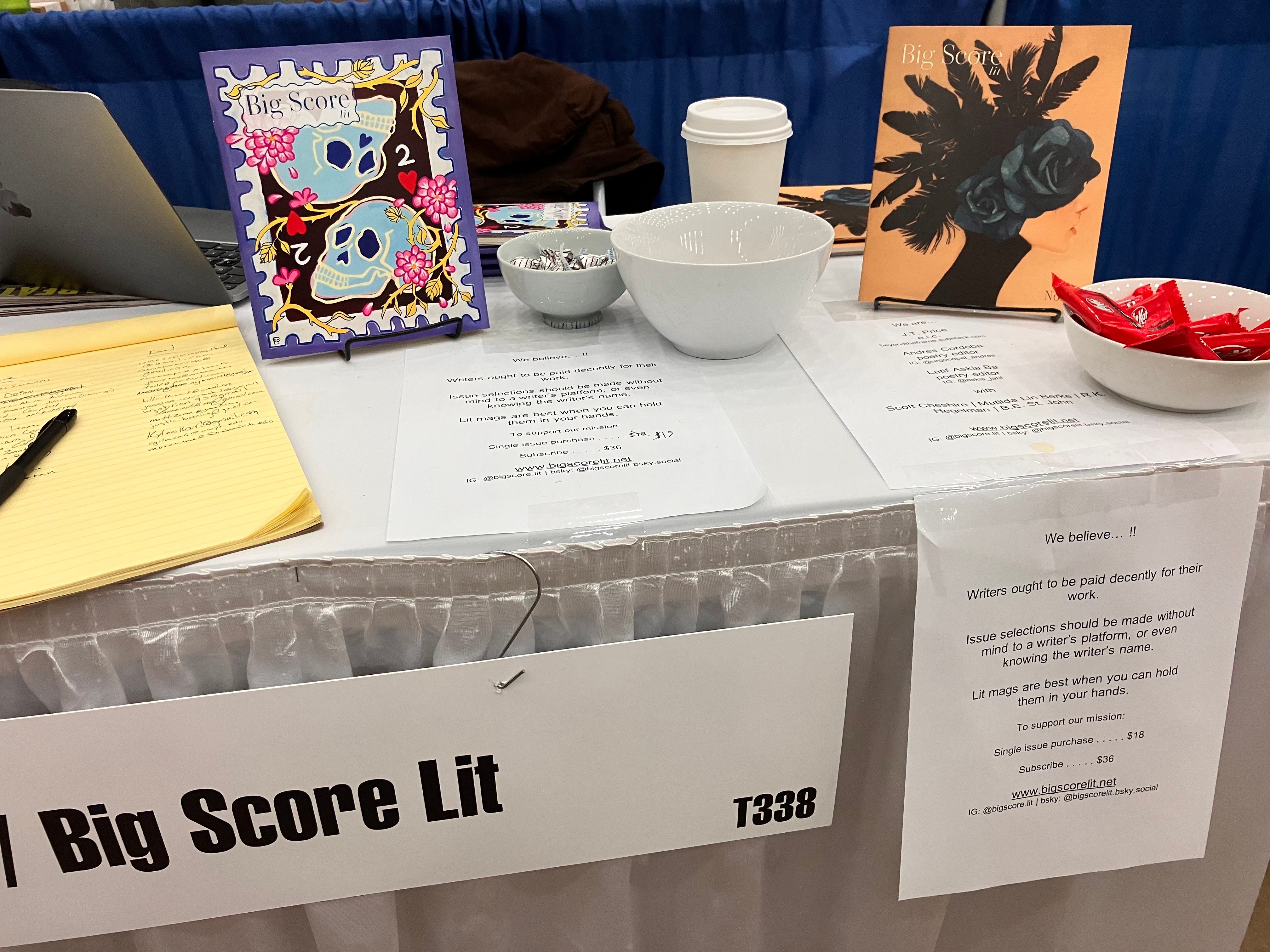
Baltimore was good to us. So many of the writers, editors, and readers gathered at the convention center showed us some love, & we are grateful.
Our statement of principles are as follows:
1) We believe writers deserve to be paid decently for their work.
2) Issue selections are best made without knowledge of platform or relationship or anything except the work itself.
3) Print, like vinyl, has a way of coming back, which is why we put emphasis on curation, the reading experience, with each issue a numbered edition of around 75 pages that can be conceivably read in one sitting and featuring a contemporary painter’s work on the cover.
And that struck a chord, apparently.
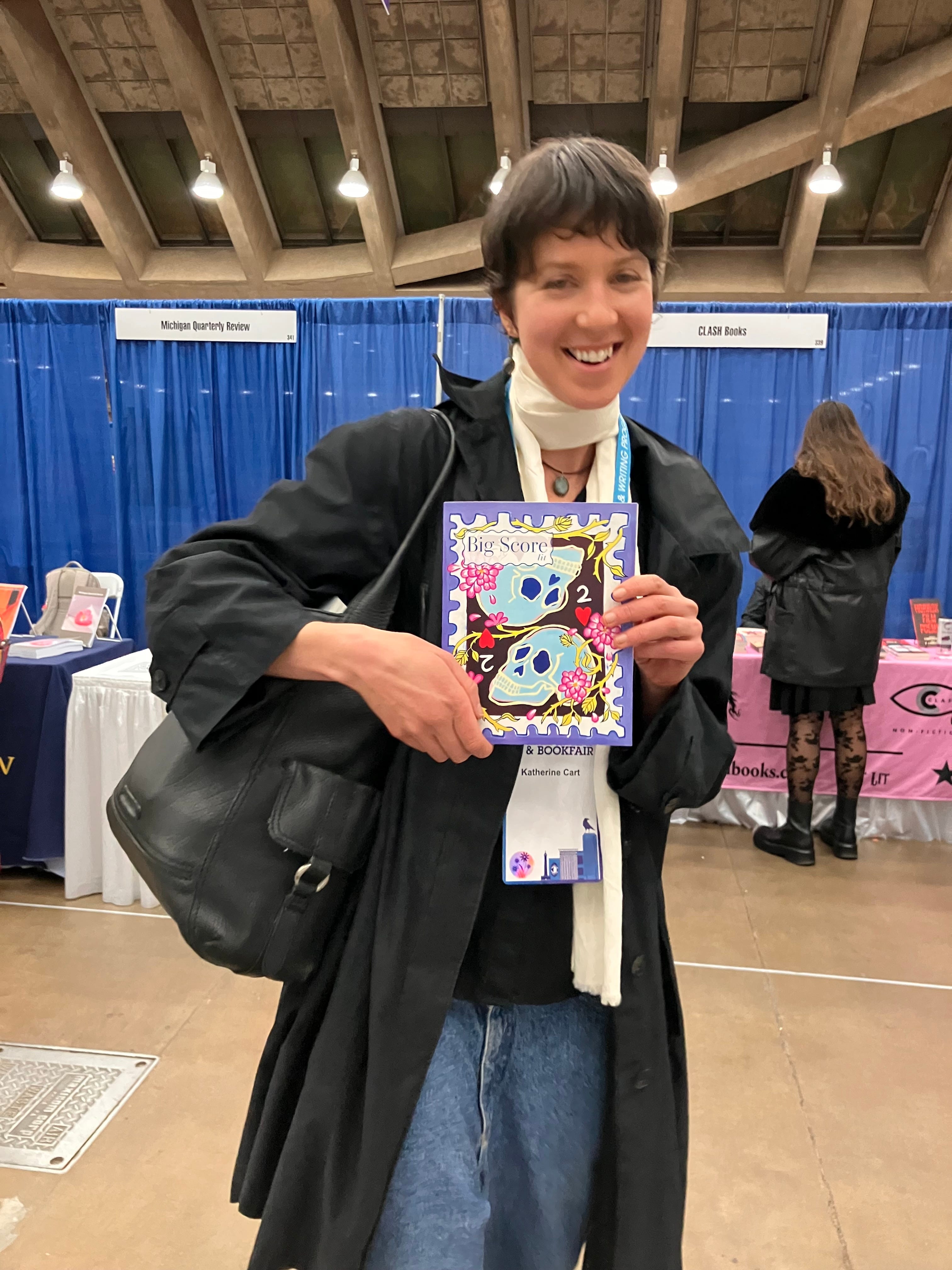
It was great, too, to see in person some of the writers whose work features between Big Score’s covers, including Katherine Cart (above), Michael Chang (below), and Damon Pham (not pictured, but who was the first to drop by).
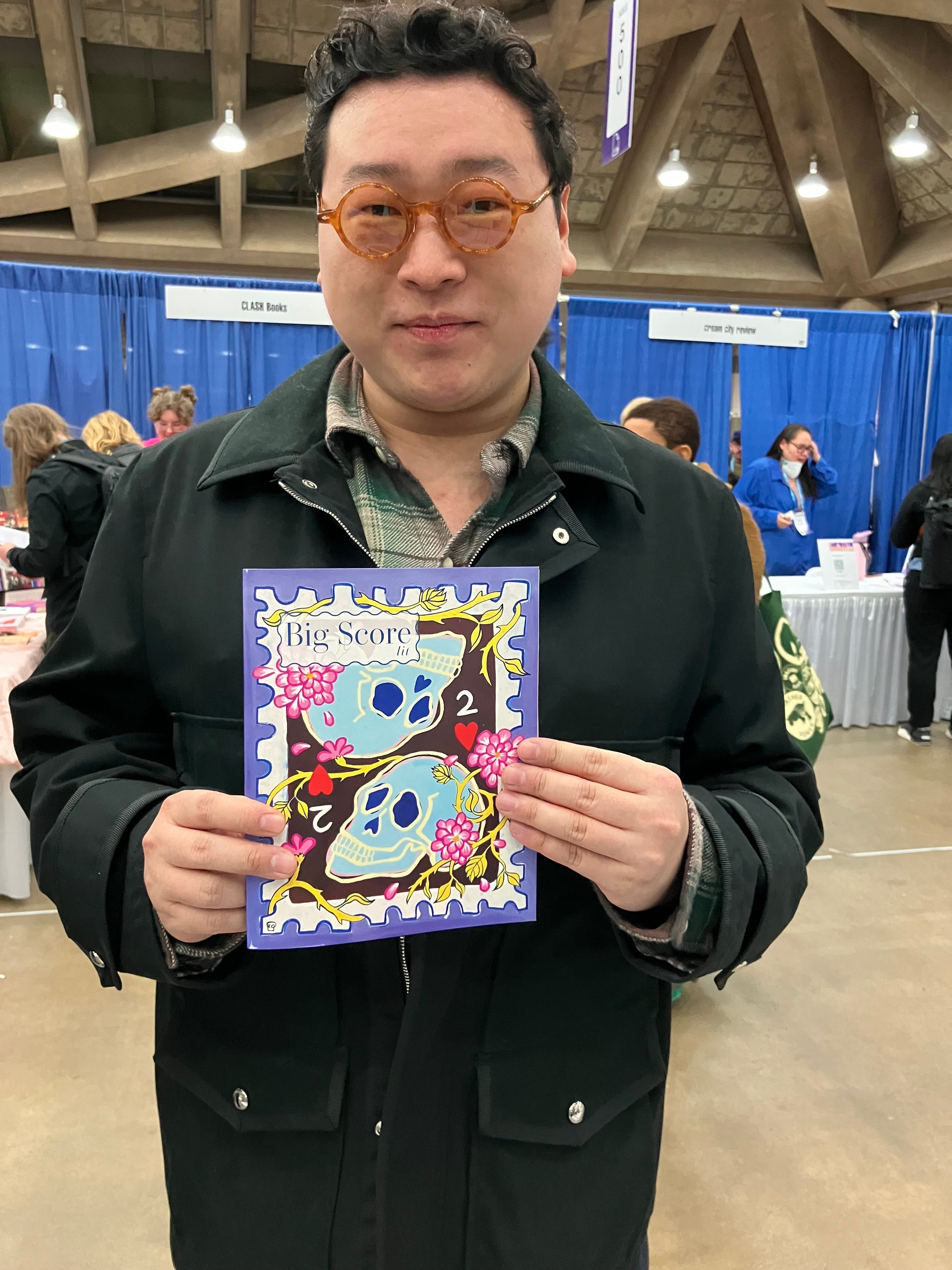
We were situated directly across from CLASH Books and Cream City Review, and not far from Whiskey Tit, A Common Well Journal, and REVEL.
Given how much of issue production is spent as time in front of a screen, it’s a great and good thing to be reminded that we aren’t endeavoring alone to foster literary culture and community among writers.
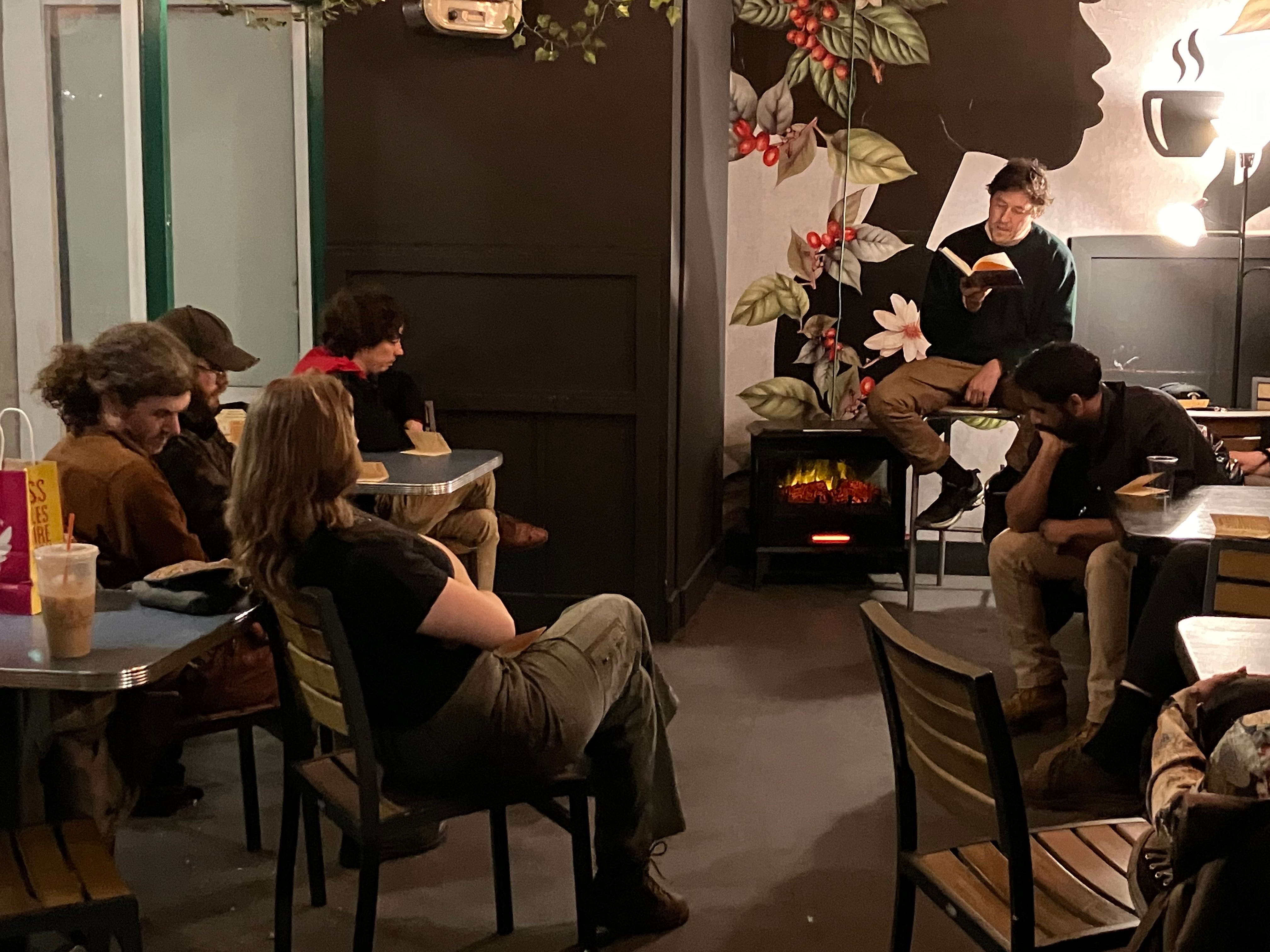
A Common Well’s table was doing this kind of legendary thing where they invited any writer who stopped by their table with an unpublished manuscript to turn over pages to them, right there on the spot, so that the editors could respond with a red pen in the moment with eye contact. And, wow, yeah. I don’t know how many writers took them up on that offer, but it is a cool thing.
In general, a convention like AWP is vital for bringing passion for words and published writing out from behind a screen and into direct contact; I probably had upwards of three hundred conversations under that lofty convention center ceiling. For all the hugging of shadows a writer is bound to do it’s welcome too, every once in a while at least, to step into the light.
The head spins, but the experience gained is invaluable.
And then there were all the readings. I did my best not to run around like the proverbial headless chicken, but did manage to make a few, like the one put on at a pizzeria by Green Writers Press, where grad school pal Molly Johnsen read from poetry debut, Everything Alive. Molly, now a Vermonter, is about as vivid and hilarious a mind as I know, and it ain’t no small thing to see a familiar face, as if in transit from wherever it is a writer begins to those destinations awaiting us (like books on a shelf).
For my final day (well, afternoon) in Baltimore, I went on the recommendation of a friend to the American Visionary Art Museum. The museum is located down a steep descent from what’s called Federal Hill, which apparently served in colonial times as a look-out for merchant ships or ships of war. In times of peace, like those probably most of us collectively cherish, it’s a park up a whole slew of stairs with a few stone monuments and a few historical placards and a pretty nifty view of Baltimore harbor. The sort of place to return to, next time in Baltimore and in love.
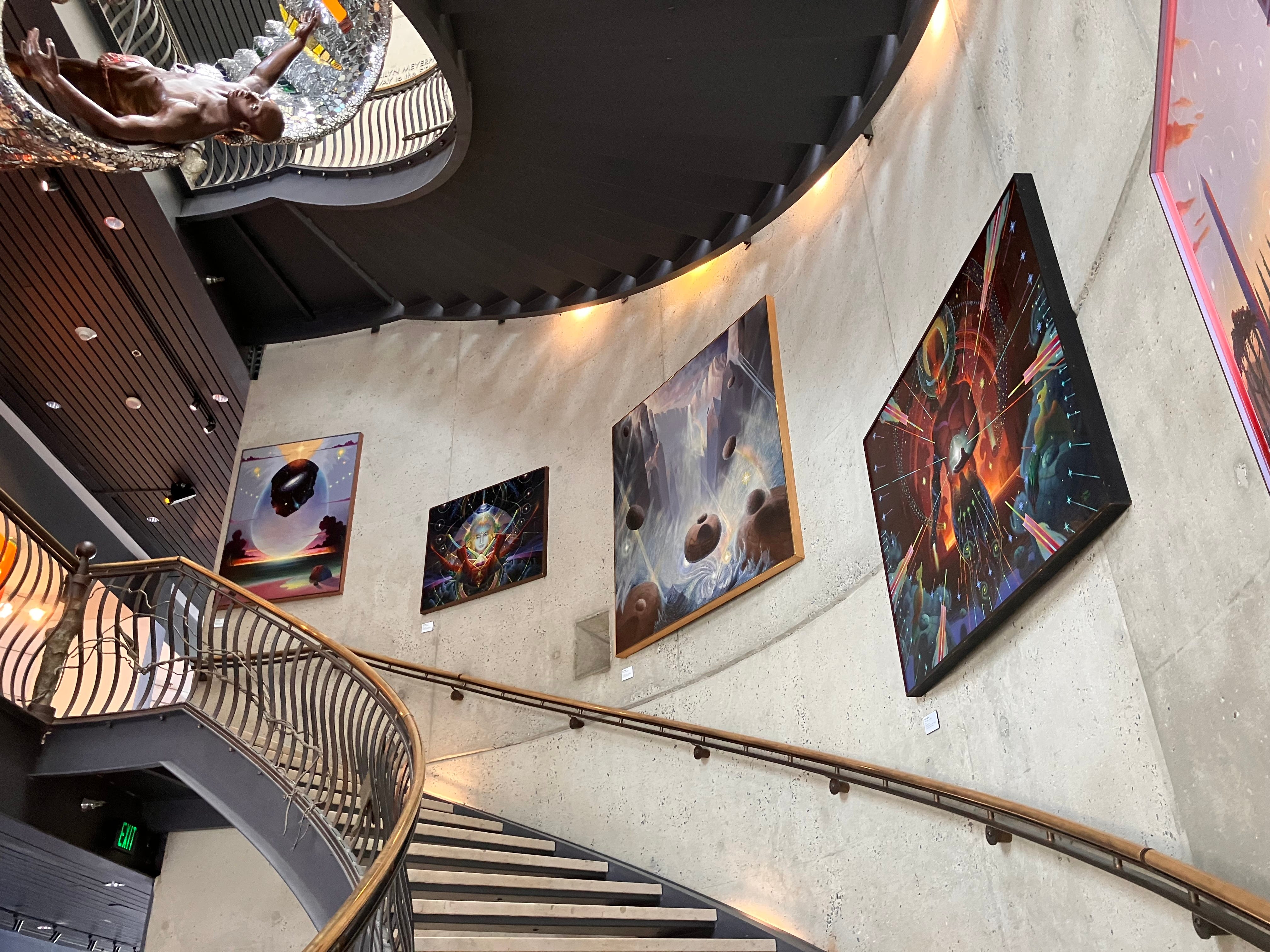
The Stanford Research Institute of Remote Viewing came up last summer in my conversation with Zach Williams, and so that was of course the first thing to spring to mind on my encountering the paintings of Ingo Swann. Or, well, that, and Erik Davis’ High Weirdness, which I reviewed when it came out what’s starting to feel like a lifetime ago, and whose cover looks pretty damn Swann-like.
The American Visionary Art Museum is teeming with art by self-taught outsiders: those creating work beyond the purview of a particular school or ordained system of approval. There are works by artists steeped in personal passion, sorting through pain, through obsession, through “unsound” frames of mind.
Not unlike Substack, in other words?
I jest, but seriously too: notwithstanding the fact that the museum’s founder was inspired by the Collection de l’art brut in Lausanne, Switzerland, there’s something quintessentially American about the entire project, this being a country (the country?) of impassioned outsiders attempting to will a thing into existence that nobody in a position of authority really thinks stands a chance of ever being a thing.
Or, once upon a time, that is how this country could be understood. Whereas now? In our late-stage madness, we are dominating the world stage while at the controls there sits a broken, emotionally starved man (whose fans love him, apparently, in equal parts for both his unashamed cruelty and transparent need for adulation): as well-deserved a fate as any?
It’s enough to drive anyone to the margins, to scratch at the corners, to poke and to dig for a tunnel in which to disappear for a while. (The American Visionary Art Museum is one great such tunnel.)
Do our better angels have a trick up their sleeves yet? Should we know better by now than to hope for a reprieve?
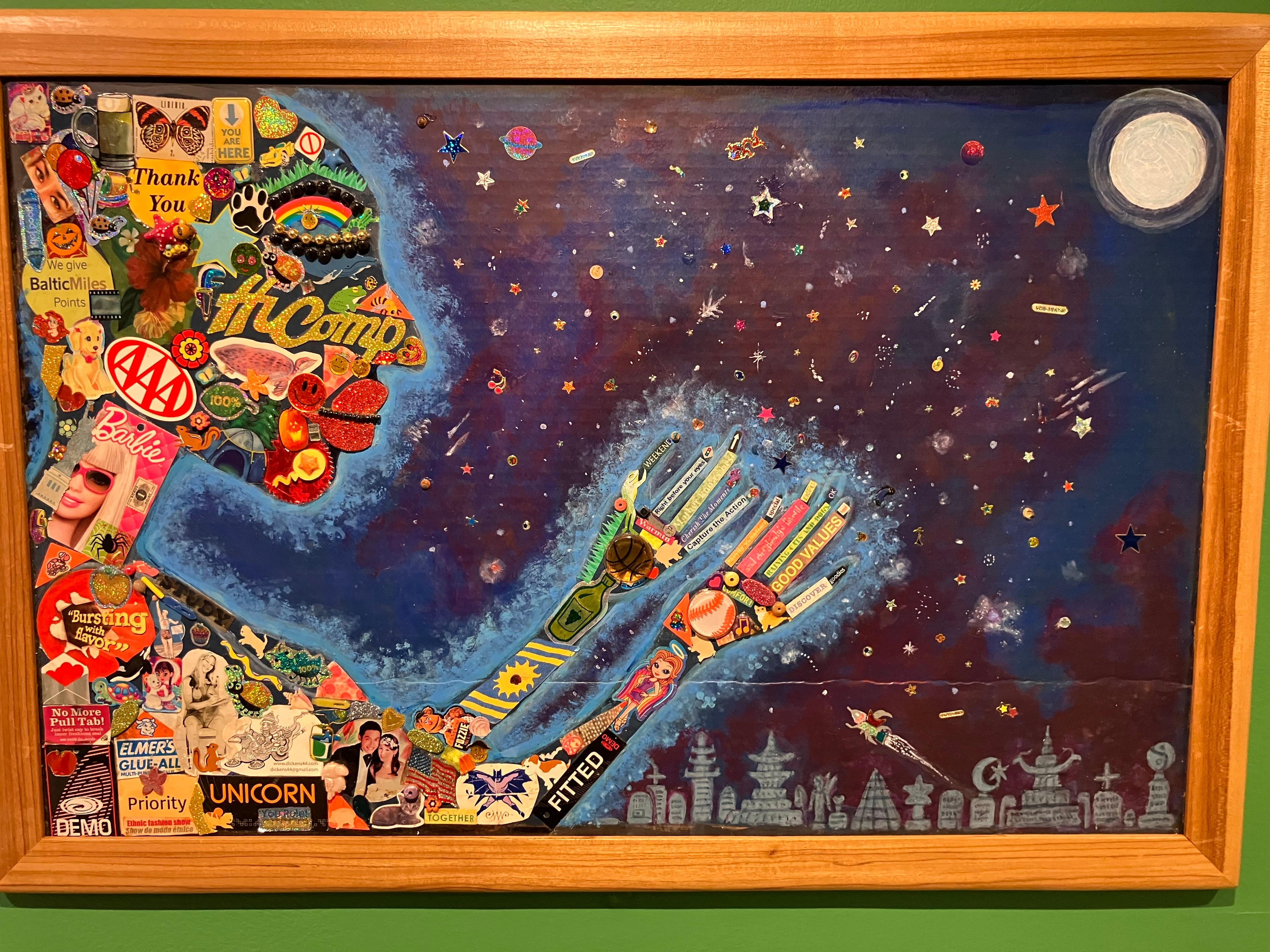
I was born in Marin County, then almost immediately left Marin County. In the suburbs of St. Louis for the first several years that I lived there, my skin was olive-hued, and while the belief probably has little basis in science, I imagined as a child that that was because of how much time I’d spent in the sun as a toddler. My earliest sense of self was as a self displaced; I built Marin County, and San Francisco, all up in my mind as a kind of prelapsarian paradise. Of course, I know better now, but it was still nice to cross paths with the work of Marin County outsider artist Dickens 44. It cannot be the only criteria that matters, but whether I’m looking at insider or outsider artwork, one of the first questions I ask myself is, Would I want to live inside a home with this piece on the wall? For me, “Stargazer” is a yes.
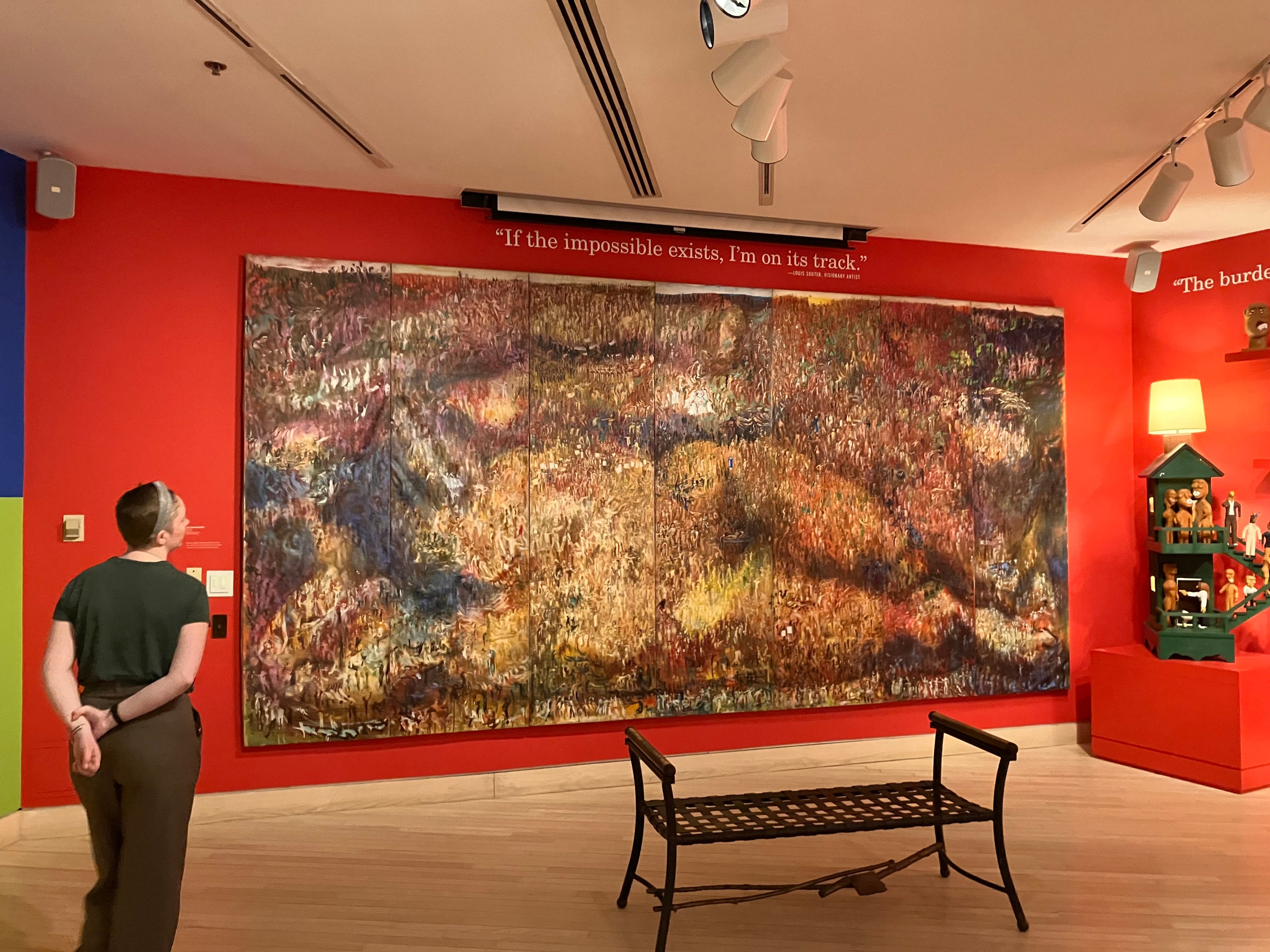
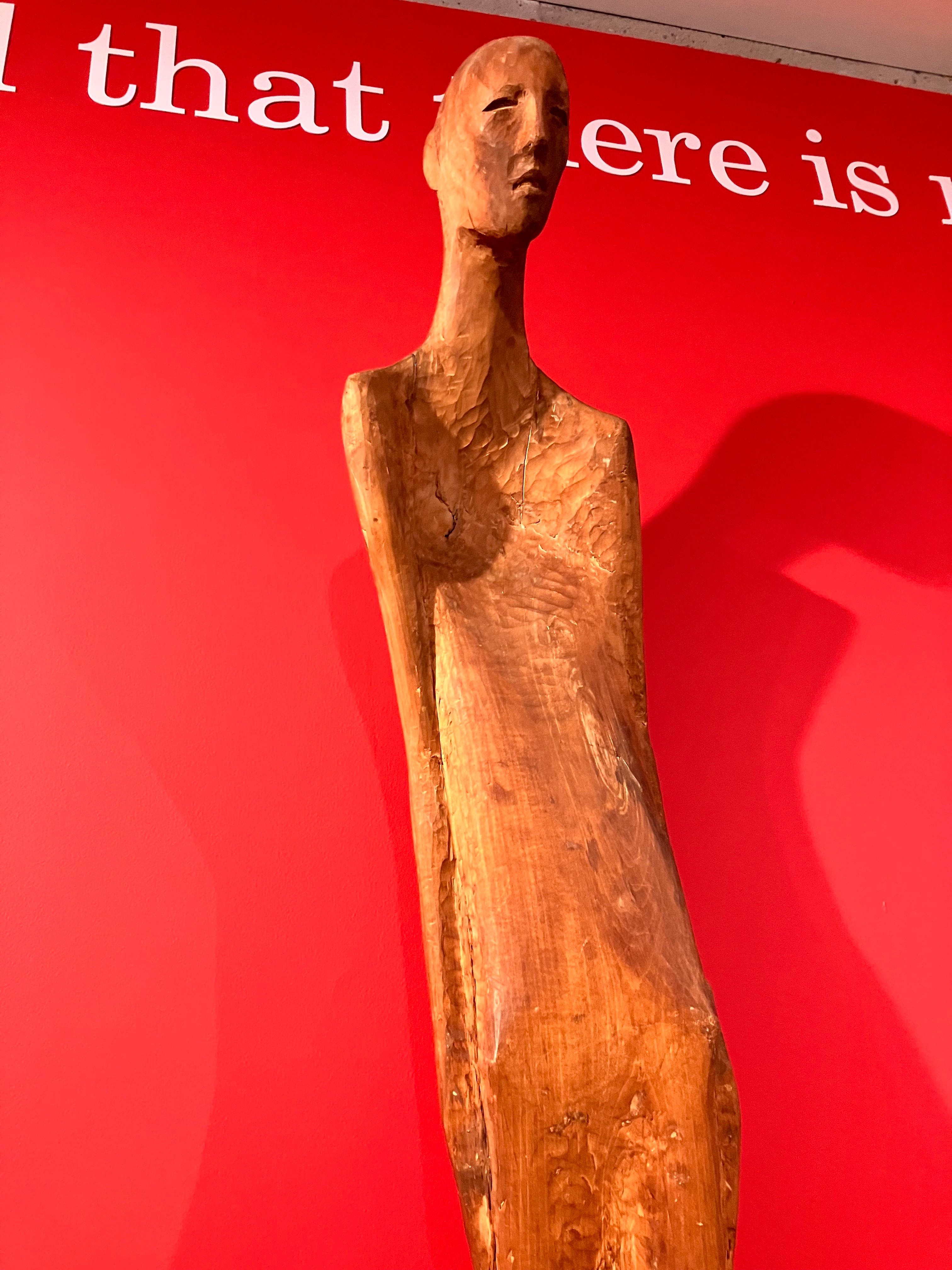
This one, by the guy on whom the Robert Redford-directed film Quiz Show was based, registers as a Rubens by way of Bosch’s “The Garden of Earthly Delights.” At a distance, the painting looks to be of a buxom reclining female nude as seen through distorting glass. Get closer and see that her complexion is made up of amassed figures, each unique. The painting is said to have taken years and years to complete, during which time its creator, James Franklin Snodgrass, withdrew from society in the aftermath of his “Quiz Show” moment. Like the sculpture of the wooden figure, Snodgrass’s painting stands as a singular work, a grand undertaking, pursued for private or obscure reasons.
It is interesting to contemplate what distinction there ultimately is between insider and outsider art, and those rare instances (think Van Gogh, think Bukowski) when outsider art effectively crosses over to become celebrated and a subject of future study—kind of giving the lie to there existing any true distinction in the first place. (Van Gogh’s brother Theo was, yes, a successful patron of the arts, and without his interventions, no doubt Vincent’s work would have remained in obscurity for all time… but that does not change the fact that Vincent pursued his craft obsessively and alone, and without much in the way of recognition in his lifetime.)
Not exactly a new observation, but identifying as an outsider has gotten to be a fashionable thing, perhaps, in part, because of the collapse of old guard values whereby gatekeepers(/insiders) were believed to give fair evaluation to any submission that came their way. The chance of discovery by savvy evaluators of talent: it’s a myth that, as a practicing artist, it’s hard to let go of, even while most of the evidence of our time appears stacked to show how hustle and drive are rewarded above all else in our tribal and fractured landscape.
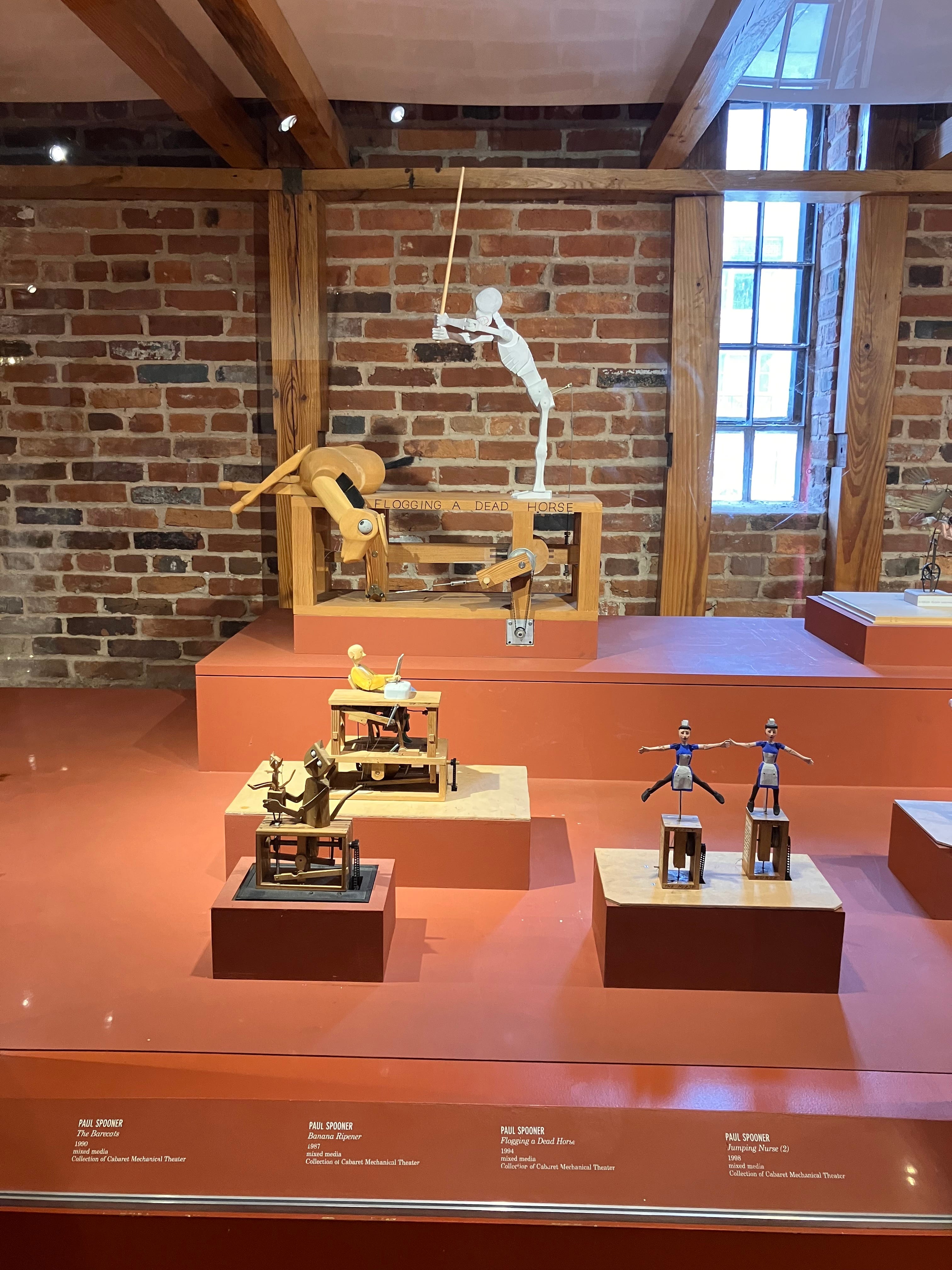
Think of Alexander Calder, and his circus, then of Paul Spooner, whose sculptural work in so many ways is evocative of Calder, while being its own thing entirely, and of how Calder became celebrated, synonymous with those dangling mobiles, while longing to return to the authenticity and purity of imagination embodied in his original circuses—or in other words, to a state like that lived by Paul Spooner.
But we’re all of us on our personal journeys, huh? And no matter how someone else’s life may seem to offer us a template, a sense of security and proof of concept (which is how so much writing is taught these days, for better or worse: look to the model and mimic, mimic away), our own lives always seem to get in the way, and through them, we cannot help but express the selves we are never not in the process of becoming.
Anyway. Come to the Big Score launch? If you’re free.